TOOLGLASS RADAR / LIVE SIGNAL
Things worth
noticing.
A quicker, lighter stream of software we have found in the wild. Radar entries are source-led until the evidence says otherwise.
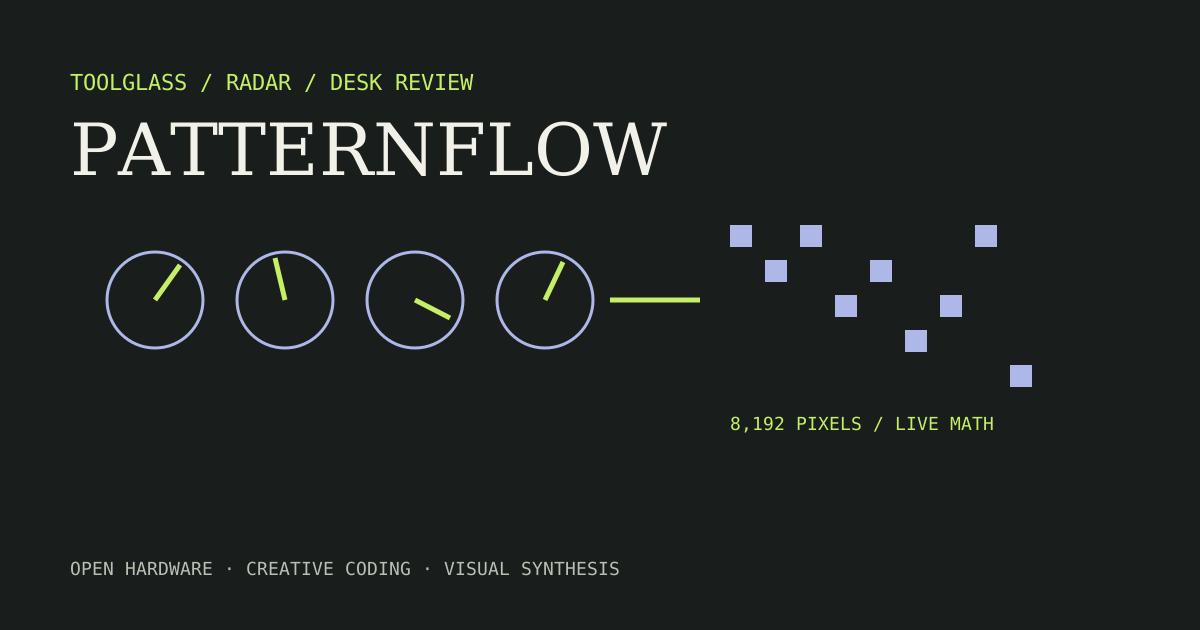
A screen that behaves more like an instrument than a television
Patternflow is an open-source 8,192-pixel LED synthesizer whose four knobs alter code-generated images in real time. The clever bit is not the LEDs; it is treating visual algorithms as playable, shareable patches.
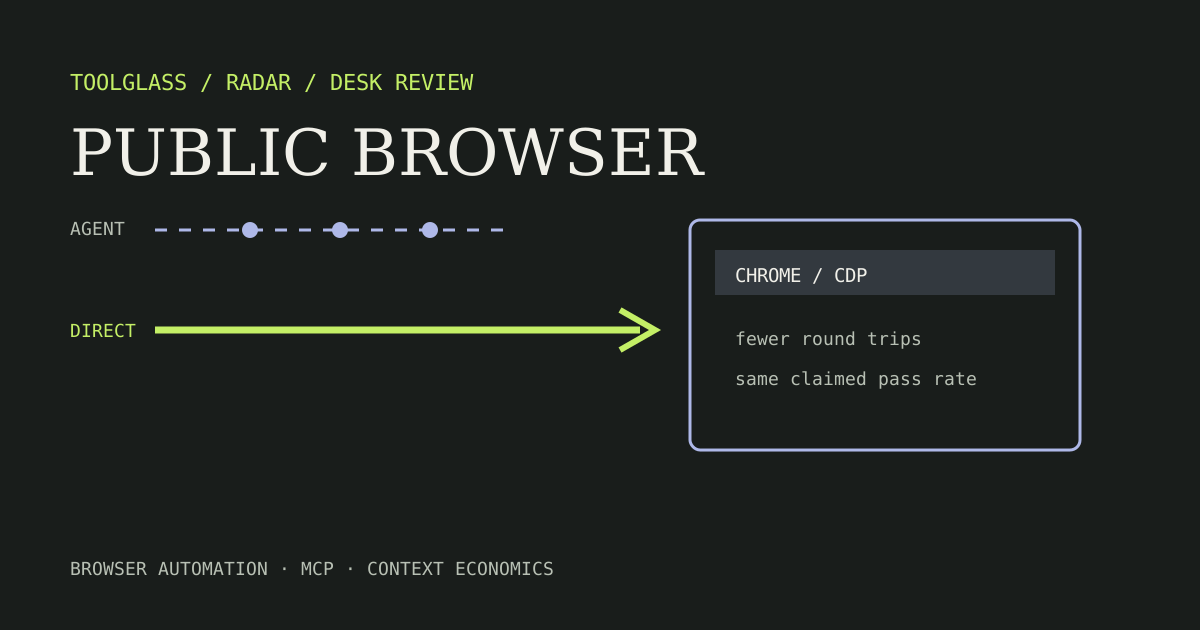
Browser agents may be paying a round-trip tax nobody bothered to count
Public Browser drives a real Chrome profile directly over CDP, but its more interesting claim is architectural: fewer agent-tool round trips can matter more than shaving bytes from each browser snapshot.
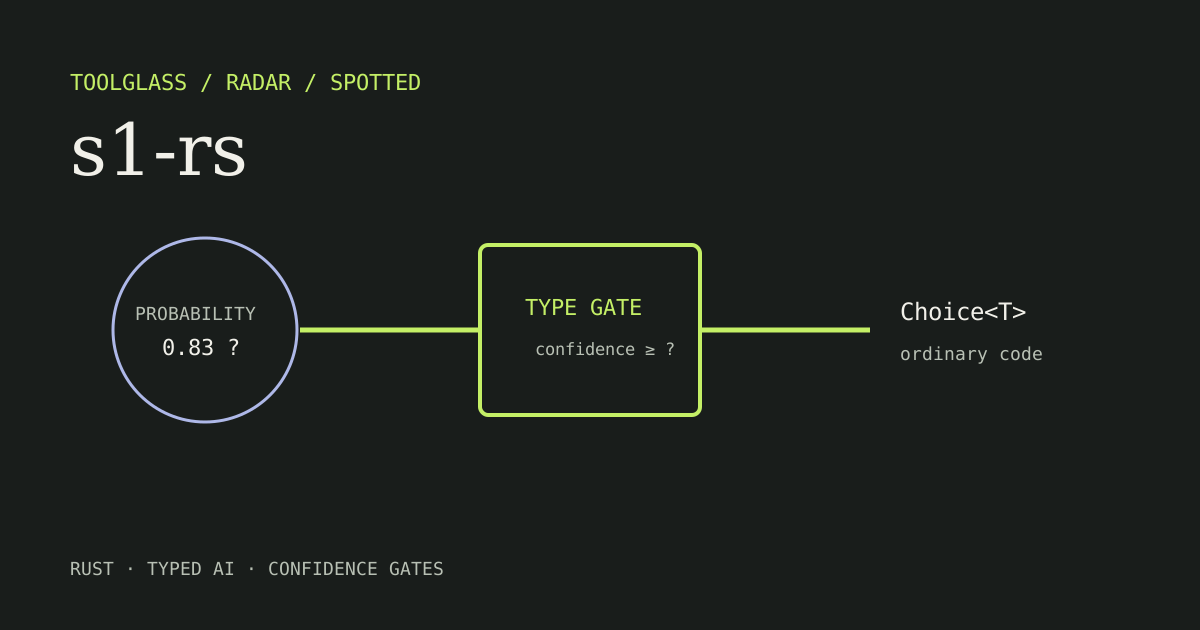
What if an AI answer had to fit through Rust's type system first?
s1-rs is a tiny, very new experiment in turning model decisions into typed Rust values with confidence gates. It is barely born, but the design points toward a useful boundary between probabilistic judgement and deterministic software.
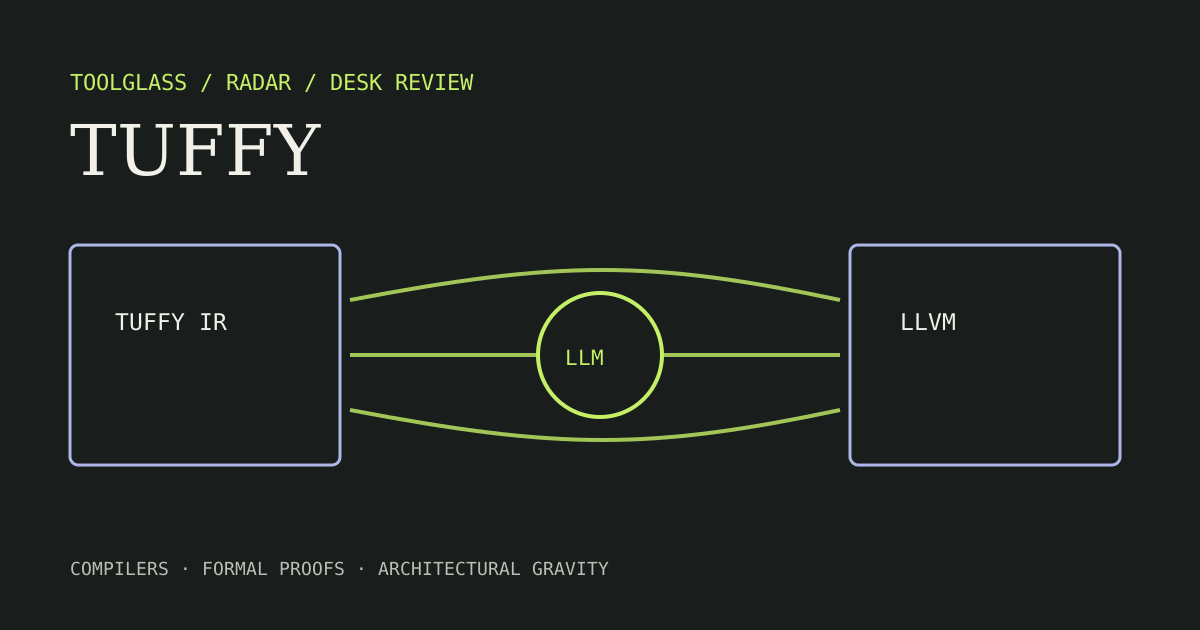
An LLM wrote an optimizing compiler. Then its author stopped the experiment.
Tuffy paired an AI-written compiler with declarative optimisations and Lean-checked proofs, reached the point of compiling Rust standard-library tests, then paused when model behaviour, design compromise and cost became part of the result.
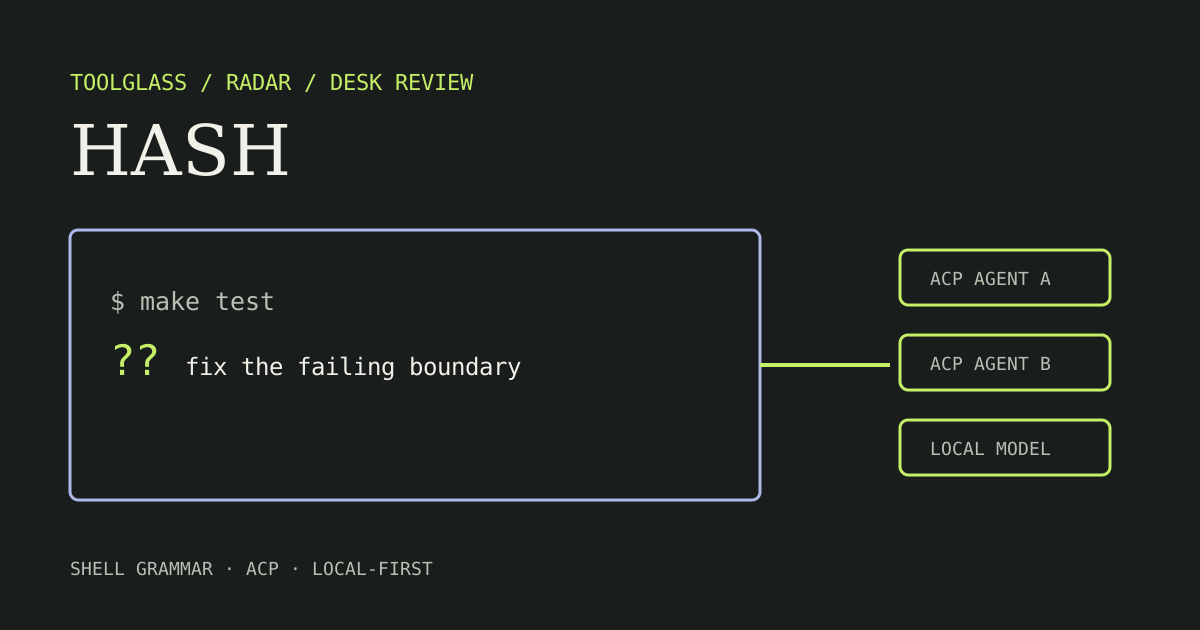
The AI command is becoming punctuation.
Hash is a POSIX shell that puts agent invocation into the grammar itself: type ?? and hand work to Claude Code, Cursor CLI, Gemini CLI or Ollama over ACP, without changing terminal emulators.
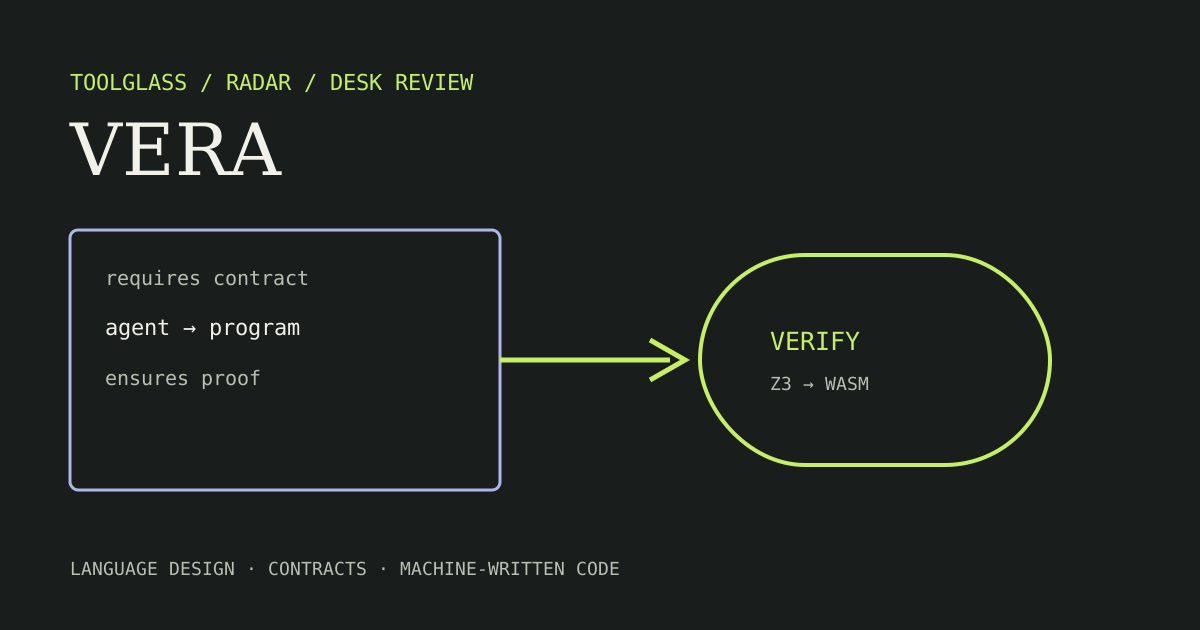
What if the programming language were designed for the machine writing it?
Vera reverses a familiar assumption: instead of teaching coding agents to cope with languages made for humans, it is experimenting with a language whose contracts, effects and verification model are meant to make machine-written code easier to check.
A disk-space map that checks the floorboards again before cutting them out.
Excise is a young Diskonaut successor built around honest storage accounting, bounded scans and unusually explicit safeguards around permanent deletion.
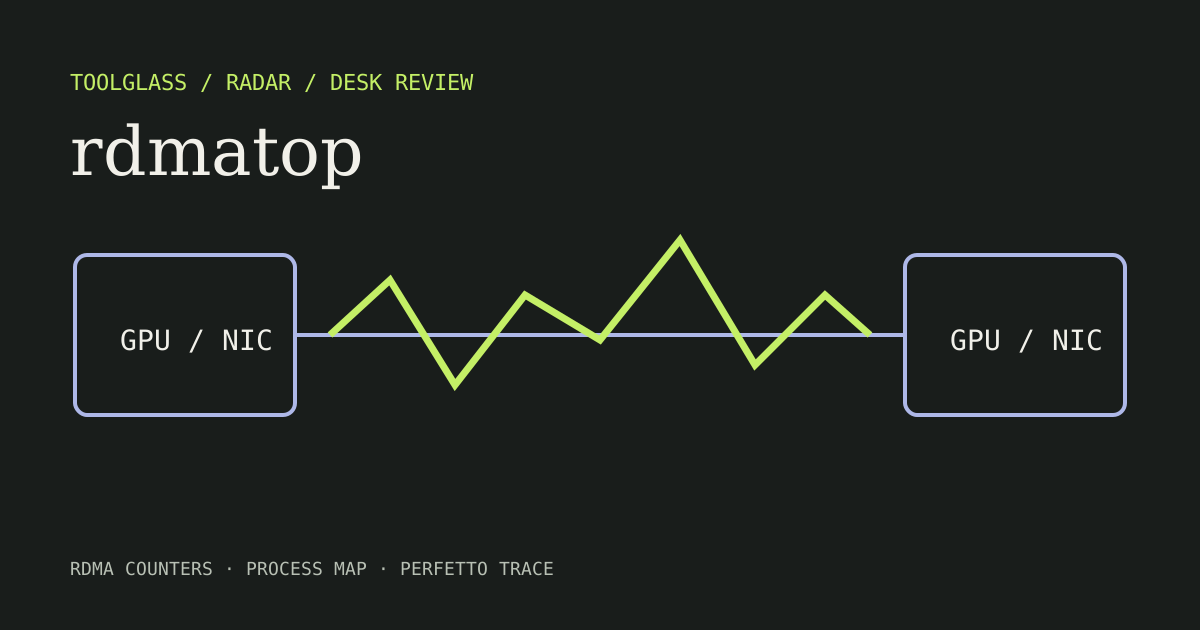
htop, but for the network fabric between expensive GPUs.
rdmatop is a small Rust TUI that turns Linux RDMA counters, queue pairs and process information into live throughput views and Perfetto traces.
Obsidian escaped into the terminal, graph and all.
A Rust TUI reads an ordinary Obsidian vault directly, renders live Markdown, backlinks, images and graphs, then lets an optional agent work through the same visible commands as the user.
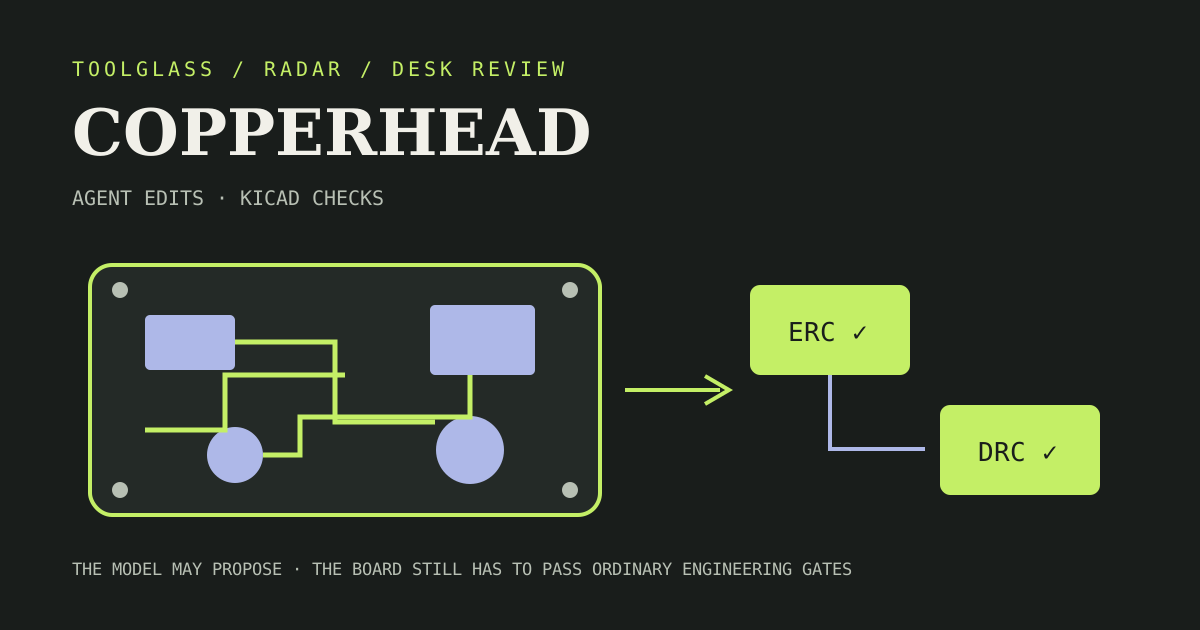
Coding agents have escaped the codebase. Copperhead is editing real circuit boards and asking KiCad to mark the homework.
Copperhead is an open-source hardware agent for existing KiCad repositories, making surgical schematic and PCB changes, carrying decisions through design documents and using KiCad's ERC/DRC as deterministic gates.
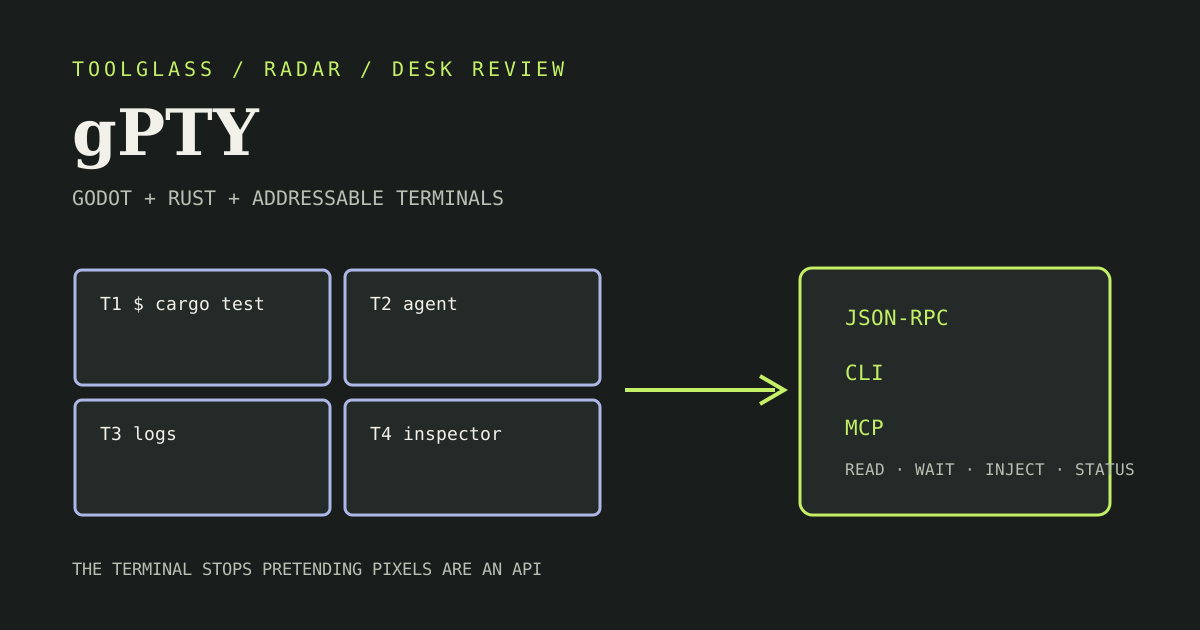
Someone built an agent-aware terminal multiplexer with Godot. The odd choice is starting to look deliberate.
gPTY combines a Rust PTY engine with a Godot interface, then exposes panes through JSON-RPC, a CLI and MCP so automation can read and drive terminals without scraping their rendered TUI.
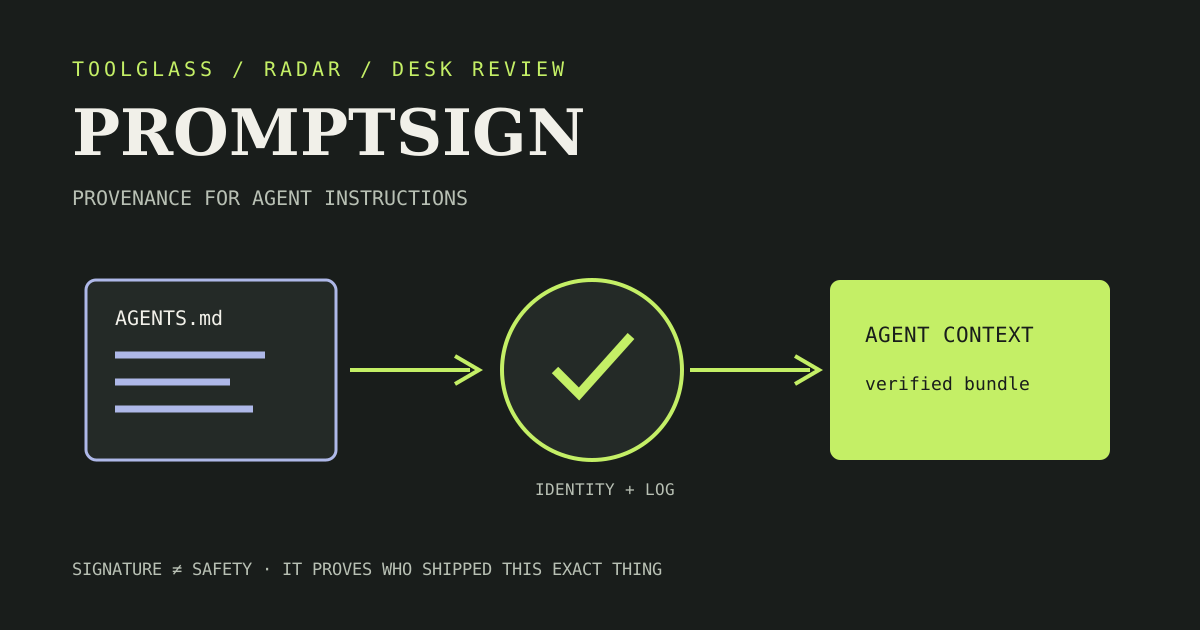
AI instruction files are executable trust. PromptSign wants them signed before your agent reads them.
PromptSign applies Sigstore-style signing and offline verification to CLAUDE.md, AGENTS.md, skills, agent definitions and their script payloads, treating prompt supply chains rather more like software supply chains.
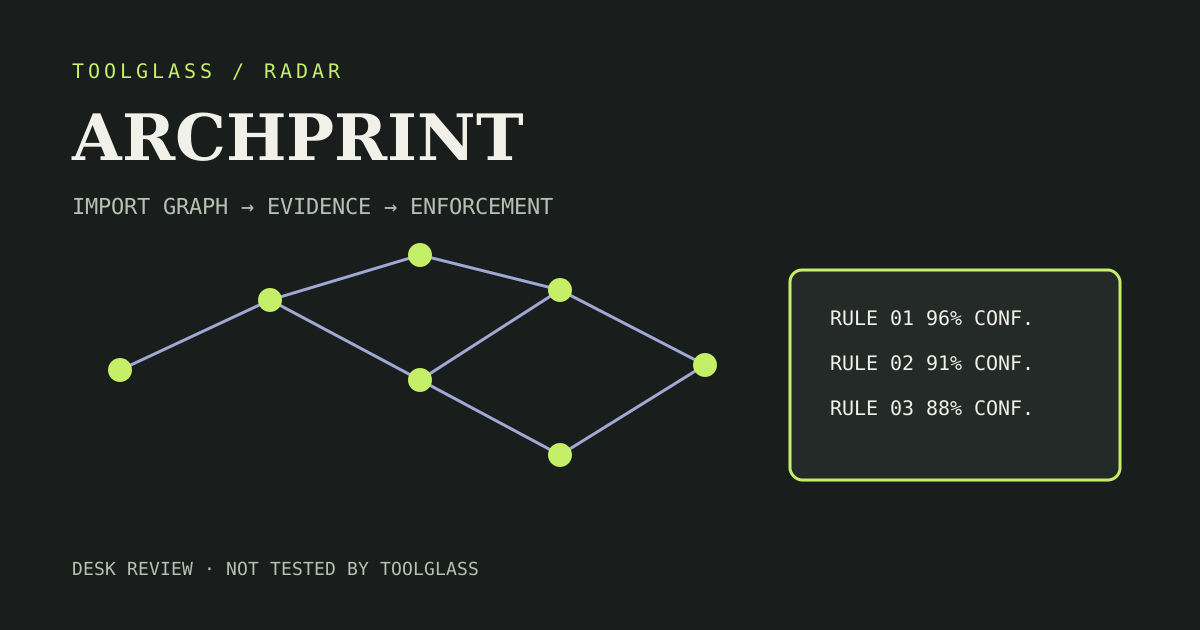
Your codebase already has architecture rules. Archprint tries to catch them in the act.
Archprint mines a TypeScript repository's import graph, keeps only patterns with statistical support, then emits enforceable rules for tools such as ESLint and dependency-cruiser.
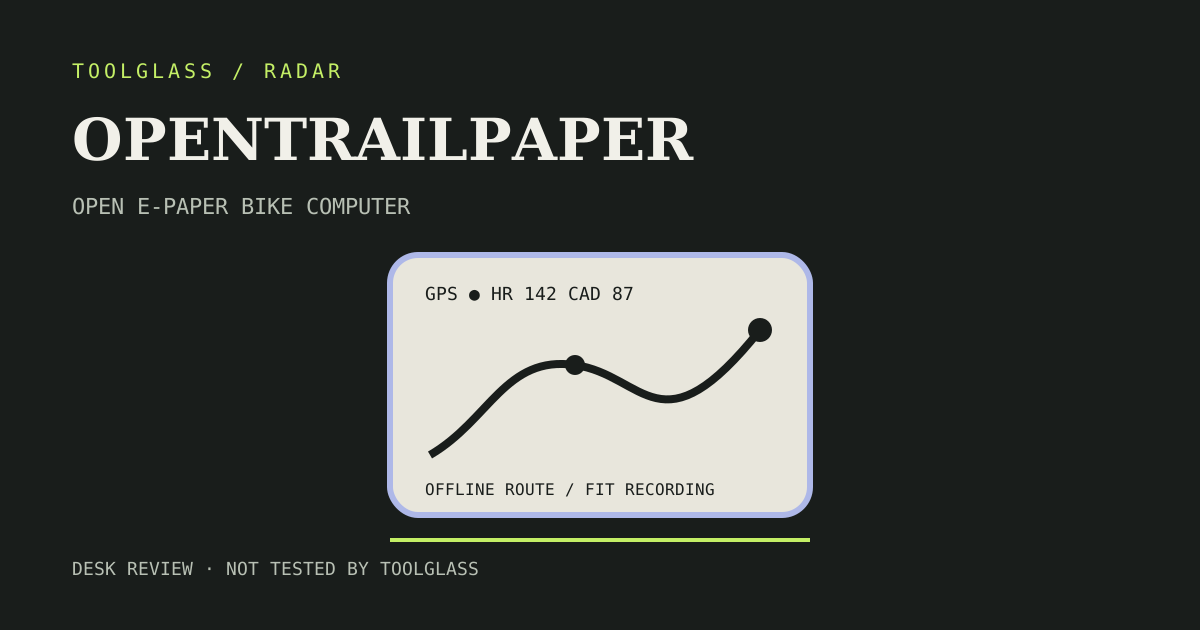
A bike computer that looks more like a field instrument than a subscription with handlebars.
OpenTrailPaper turns an off-the-shelf ESP32-S3 e-paper board into a standalone cycling head unit with offline maps, GPX navigation, FIT recording and Bluetooth sensors.
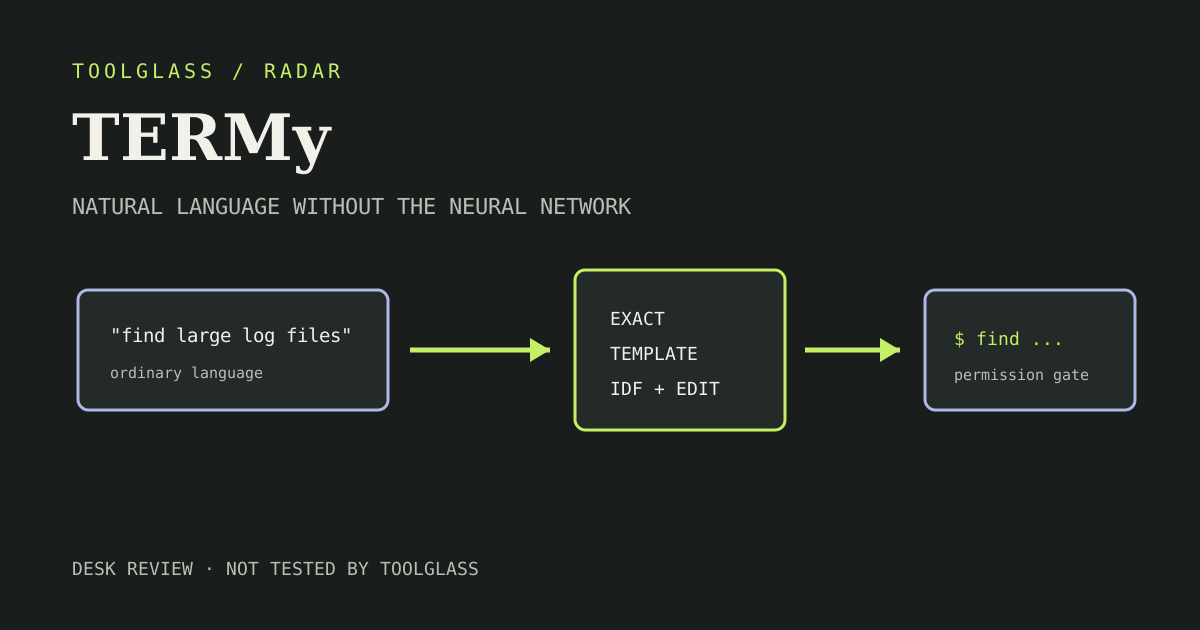
Natural-language shell commands, zero neural networks, and a refreshing refusal to summon a trillion parameters.
TERMy maps ordinary-language terminal requests to commands using a compact dataset format and deterministic matching rather than embeddings, machine learning or an LLM.
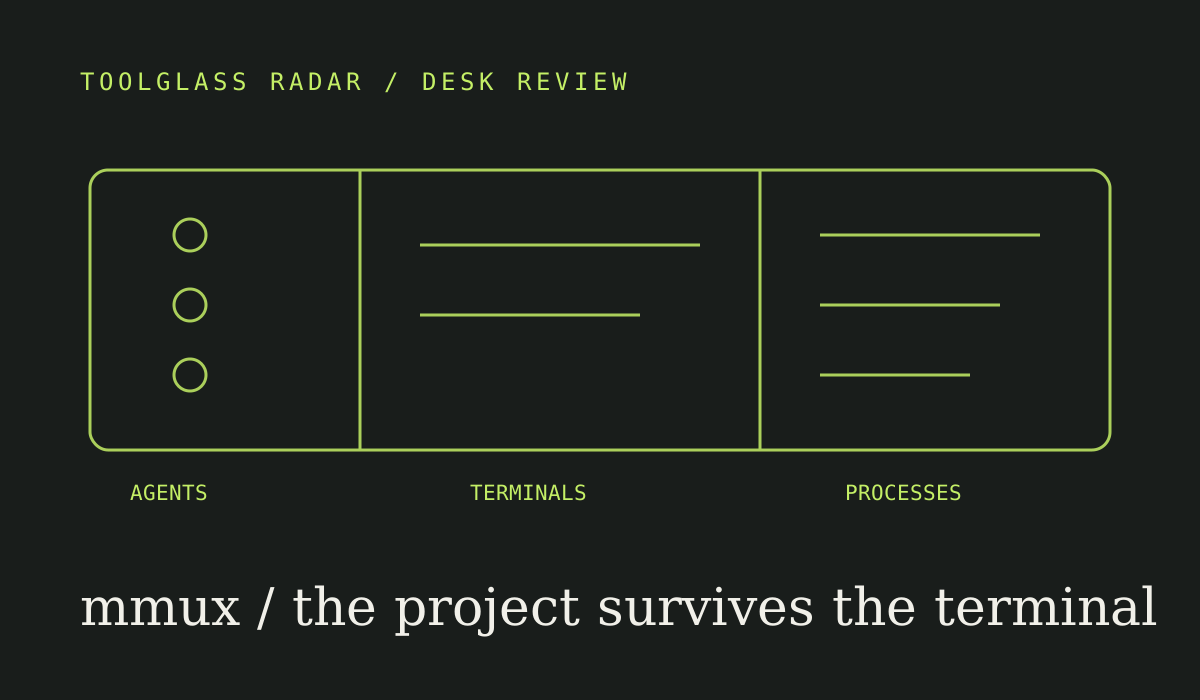
A terminal multiplexer built around AI agents instead of pretending they are ordinary shells.
mmux wraps persistent tmux sessions in a project-aware TUI for agents, terminals, dev servers, worktrees and Git.
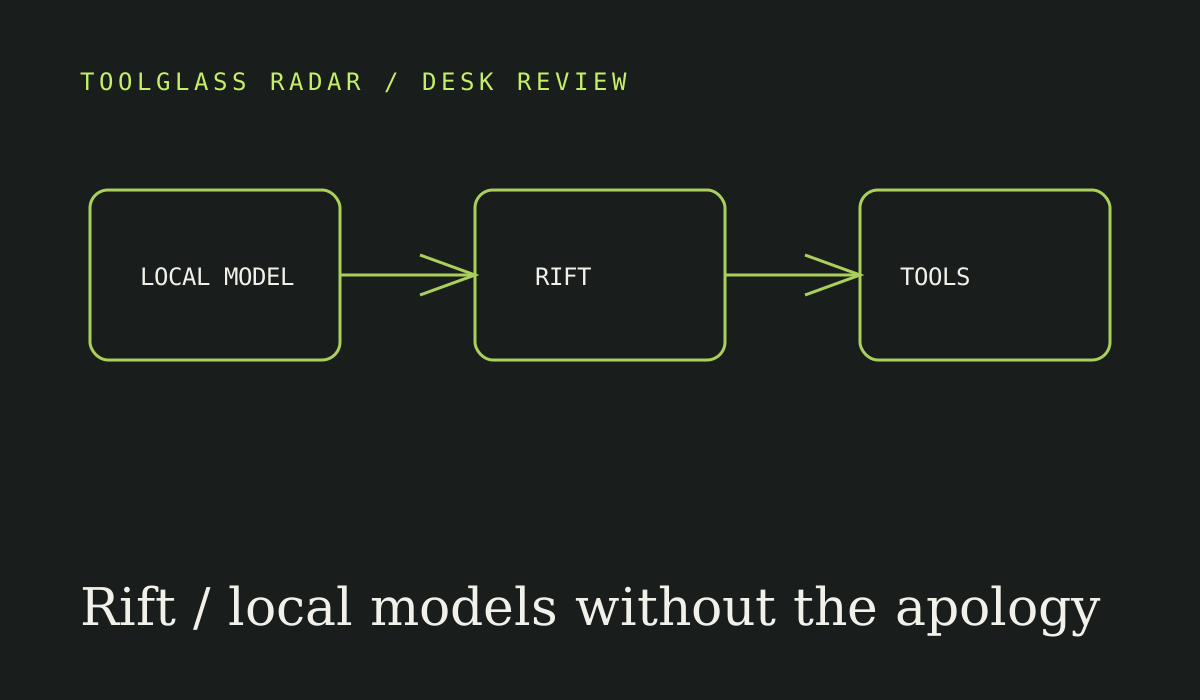
A coding agent that treats local models as first-class citizens.
Rift is a Rust terminal coding agent built around small binaries, local inference, explicit context control and failure recovery.
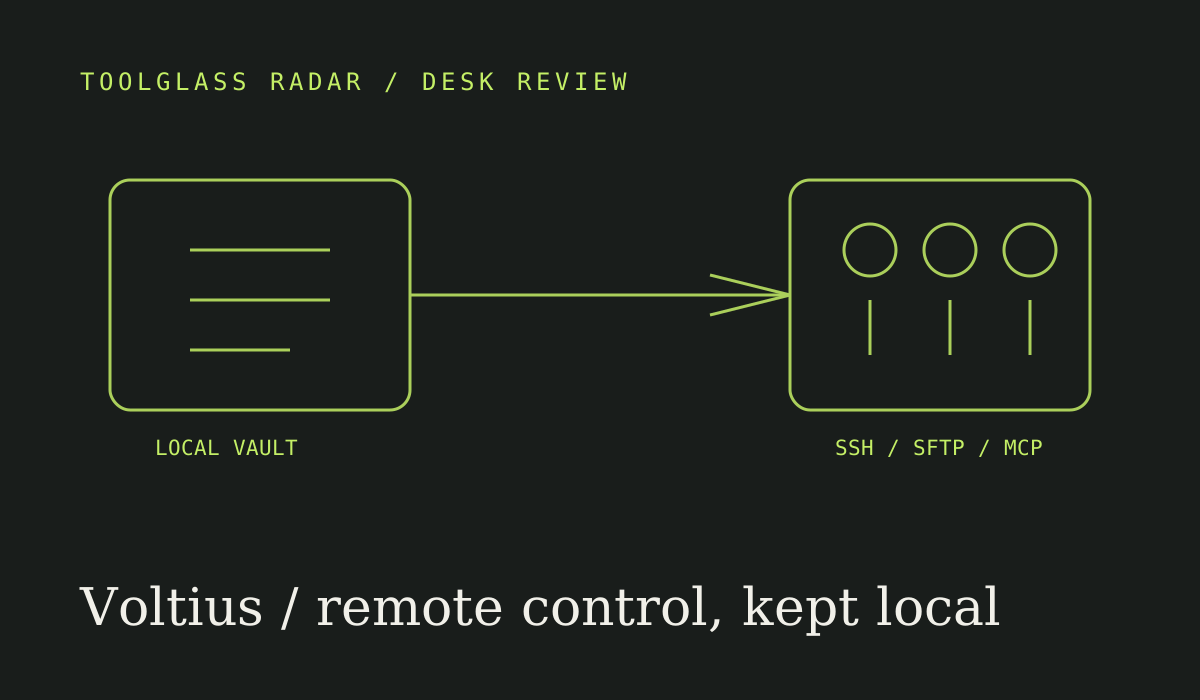
An SSH client that has quietly grown into a local infrastructure cockpit.
Voltius combines SSH, SFTP, serial, encrypted sync, containers, plugins and a local MCP server in a Rust/Tauri desktop app.
A small window into what an agent actually did.
Tracelet turns an OpenTelemetry stream into a local view of prompts, tools, pauses and errors.
A database that starts with the question: what was true then?
ChronDB puts Git-style history at the centre of a key/value store. Compatibility is the harder half of the idea.
A desk that refuses to be a window.
Editors, terminals and browser panels share an infinite local canvas. The map may be the point, or the problem.
EDITORIAL RULE
Radar may publish nothing on a scheduled run. It is here to find the unusual, not to fill a quota.
How Toolglass labels evidence ↗