Repository, README, benchmark notes and public project material. Toolglass has not installed or run Rift.
TESTED BY TOOLGLASS: NO
What is it?
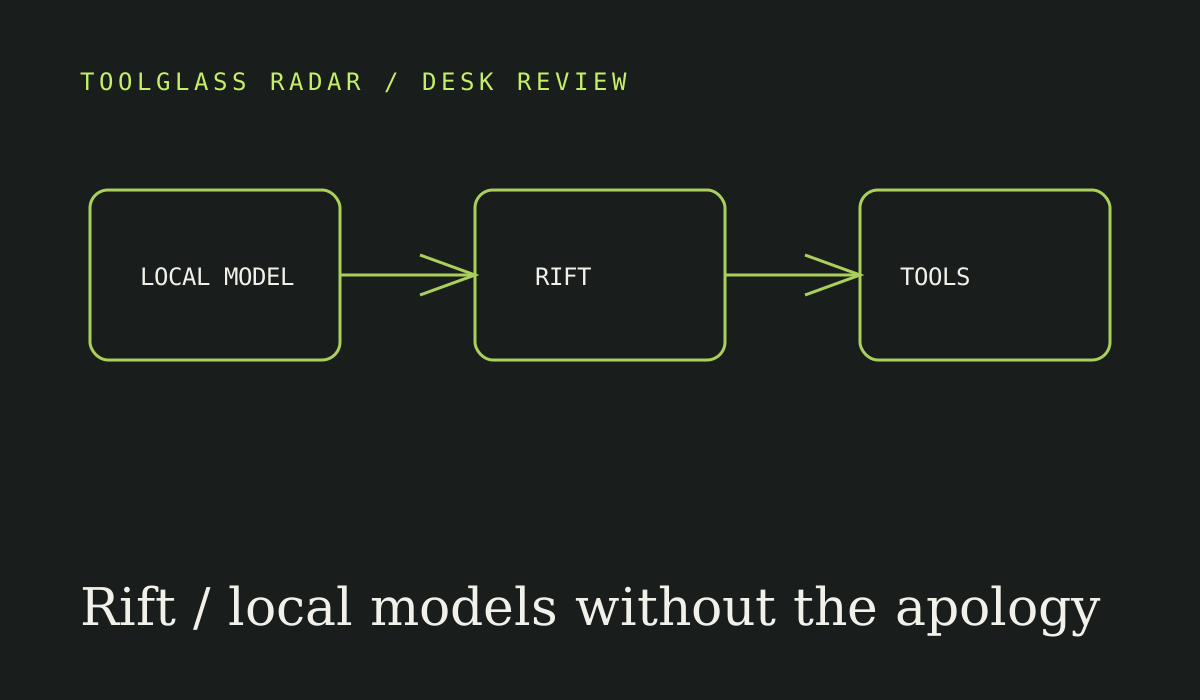
Rift is a terminal coding agent written in Rust with Ollama and OpenAI-compatible local servers treated as primary targets rather than compatibility afterthoughts. The project also exposes headless JSON output, a VS Code bridge, a desktop shell and a worktree-based parallel mode called WarpDrive.
Why did Radar notice it?
Most coding agents assume a large hosted model and abundant context. Rift is interesting because it designs around the opposite constraints: local models, finite context, unreliable tool calling and the need to see when truncation or repetition is happening.
Its benchmark claims are unusually concrete for a tiny project: same-model task suites, prompt-token accounting and recorded traces rather than a vague 'fast' badge. Those numbers remain project claims until independently reproduced.
What's the catch?
The project is very small and moving quickly. Its strongest performance claims come from its own benchmark harness, and local-model reliability is highly sensitive to model choice, prompt format and server behaviour. Toolglass has not reproduced the comparisons or tested its recovery paths.
Who might want it?
Developers running Ollama, vLLM, LM Studio or llama.cpp who want an agent that assumes local inference is normal, plus people who care about prompt-token budgets and transparent failure handling more than ecosystem polish.
Radar verdict
One of the more technically specific local-first coding-agent projects Radar has seen; promising precisely because it attacks the boring failure modes instead of pretending they do not exist.
Next step
Re-run its published task suite against the same local model and compare token counts, completion rate and wall time with one established agent.